

Describe the moisture issue
Record resin, regrind share, storage history, current defects and the packaging state.
DM2476G is GE CHEMICAL’s 75.9% grey CaO drying masterbatch for moisture-exposed injection, extrusion and film blowing. Its current TDS lists a 24% recycled PE carrier, 0.10% max moisture and a 1% recommended starting dosage.
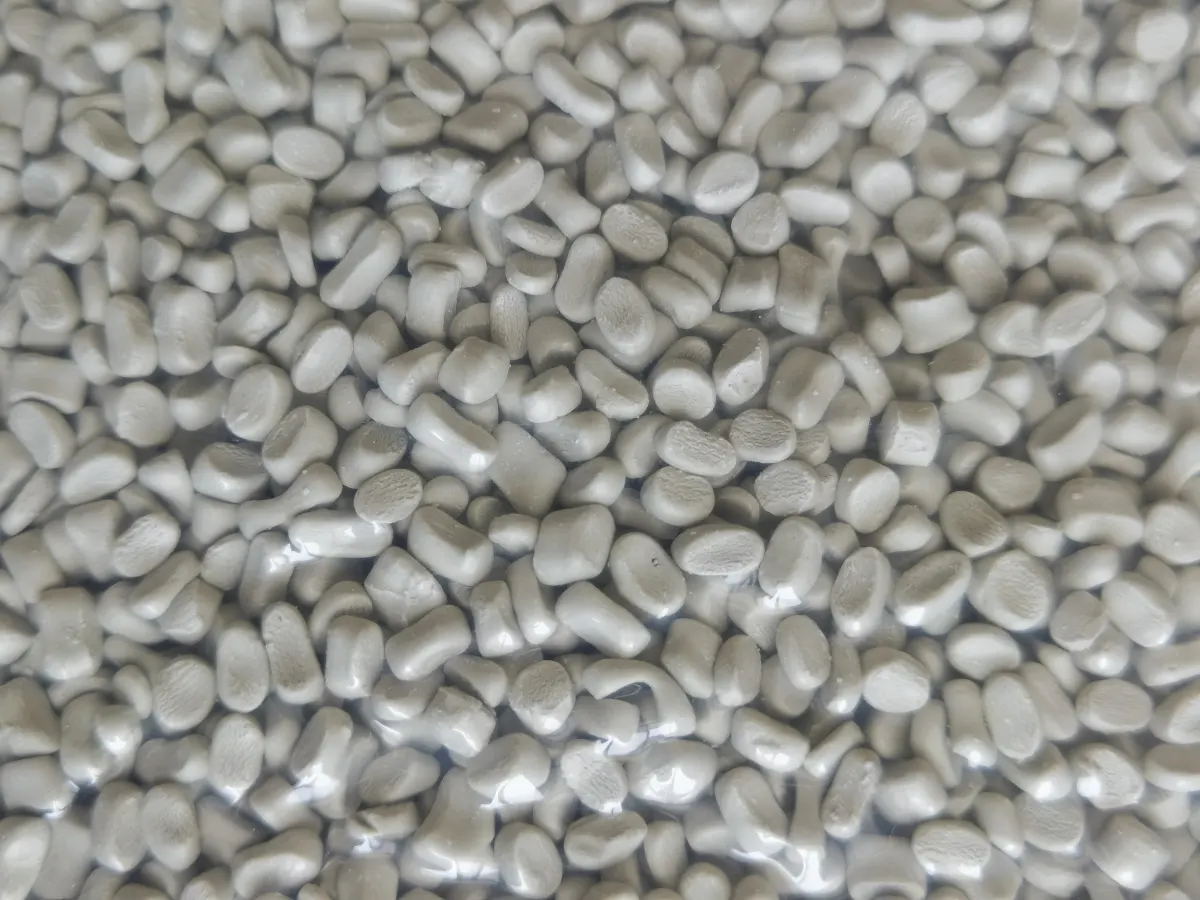
Calcium oxide reacts with water that reaches the melt. When wet resin, washed regrind or humid storage brings moisture into the barrel, steam can appear as bubbles, voids, splay, gels and unstable surfaces. DM2476G is an in-process drying aid for the moisture that remains after storage and pre-drying controls.
DM2476G binds moisture; it is not a chemical foaming agent or anti-foam chemistry. Keep drying, color and venting in separate columns of the trial record. The TDS recommends a 1% starting dosage, adjusted only after line verification.
Review application checks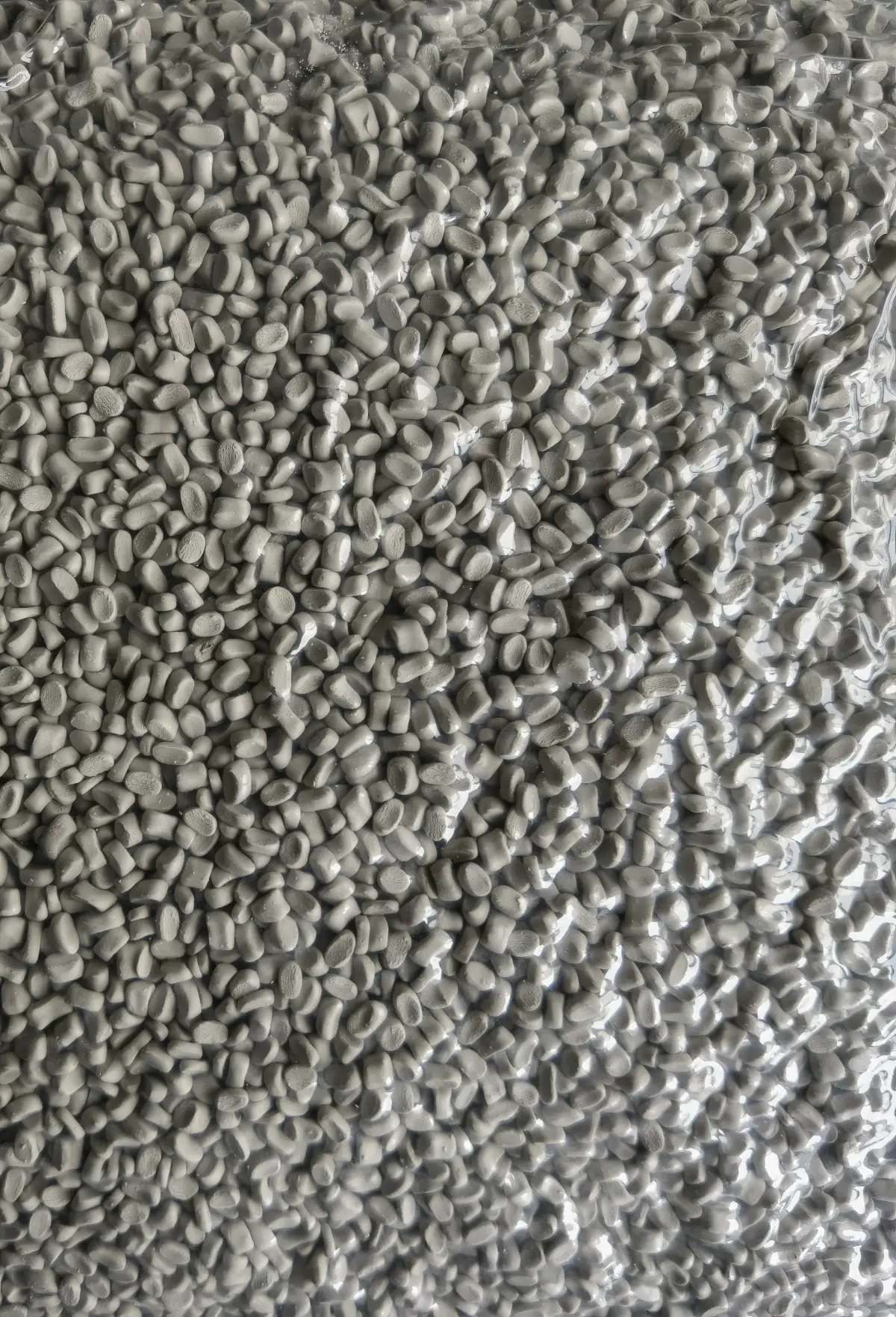
Most of each pellet is active drying capacity: 75.9% grey CaO, a 24% recycled PE carrier and no CaCO₃ filler. The grey tone comes from the CaO package, so confirm any color tolerance at the planned dose. The recycled carrier is part of the TDS scope; check the base resin, buyer rules and end-use program before approval.
The TDS lists general use in injection, extrusion and film blowing. Confirm the dosage where resin, regrind, humidity or storage conditions change.
Evaluate near the TDS 1% dose when wet resin or regrind is linked to splay, bubbles or voids. Moisture removal does not correct short shots, poor venting or the wrong melt temperature.
Use in sheet, profile or pipe trials where feedstock moisture is confirmed. Match expectations to the product surface: dark utility parts tolerate a grey cast differently from light or transparent work.
Use in a controlled PE film trial when bubbles, gels or surface defects are linked to moisture. Thin film makes both steam defects and any grey tint easier to see.
These values come from the current DM2476G technical data sheet. Confirm the current controlled version, SDS and any application-specific documents before production approval.
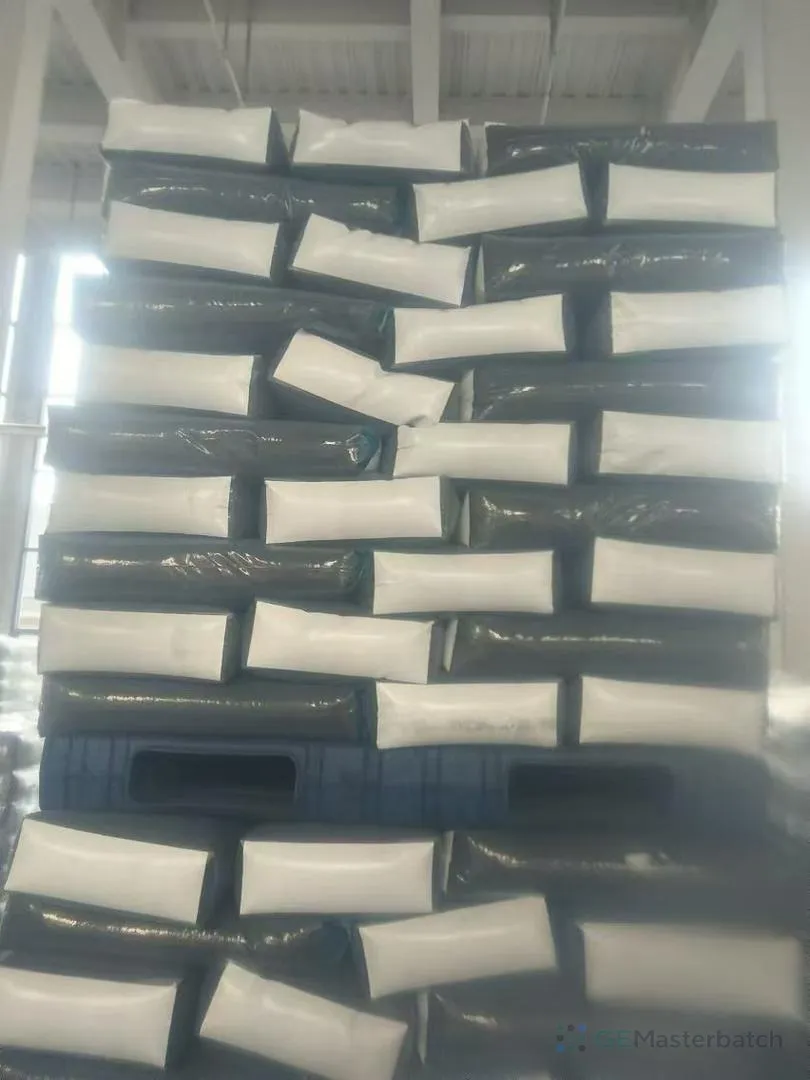
Grey 3.0 × 3.0 × 2 mm granules are supplied in vacuum bags. Keep the packaging sealed until use so ambient moisture does not consume CaO capacity.
| Commodity | Desiccant masterbatch |
|---|---|
| Appearance | Grey granule |
| Grade / model | DM2476G |
| Granule size | 3.0 × 3.0 × 2 mm |
| Carrier | 24% recycled PE |
| CaO content | 75.9% grey CaO |
| CaCO₃ filler | 0 |
| Dispersion | Well |
| Softening | Well |
| Moisture | 0.10% max |
| Packaging | 5 kg vacuum PE bags; 5 bags in a 25 kg carton |
| Addition ratio | 1% recommended starting dosage |
| Applications | General use: injection, extrusion and film blowing |
Pre-drying and dry storage remain the first controls. Use DM2476G when moisture still reaches the process, and compare the trial against the same material without desiccant.
Record resin, regrind share, storage history, current defects and the packaging state.
Keep DM2476G packaging sealed and dose the TDS starting level on a controlled run.
Compare bubbles, voids, splay, surface, colour and processing against the control.
Forty-nine practical questions on the material, application, trial, packing, purchasing and document scope. Open a group or go directly to the question you need.
Request current documentsDM2476G is a grey pelletized desiccant masterbatch carrying 75.9% CaO in a 24% recycled PE carrier, with no CaCO₃ filler. The TDS lists general use in injection, extrusion and film blowing with a 1% recommended starting dosage.
A desiccant masterbatch is a functional concentrate selected to reduce moisture reaching the melt. DM2476G is grey because of its CaO package, not because it is intended as a pigment or appearance grade.
Silica gel protects finished packs after molding. DM2476G works in the melt during injection, extrusion or film blowing. It does not replace packaging desiccants, and packaging desiccants do not replace in-process moisture control.
Calcium oxide reacts with water to form calcium hydroxide. That binds free moisture which might otherwise flash into steam in the barrel. Once the CaO capacity has reacted, it is spent, which is why sealed packing and dry storage matter.
The TDS lists a grey granule and grey CaO at 75.9%. The appearance comes from the active desiccant package, not carbon black pigment. Natural, transparent and light-toned parts need a controlled trial because the grey pellet may shift appearance.
Most of each kilogram is calcium oxide, so the pellet carries substantial drying capacity at a low starting dose. Loading alone does not prove performance; compare dispersion, moisture control and the finished part on the actual line.
DM2476G is designed as CaO plus carrier, not a limestone-padded concentrate. The zero filler value keeps more mass available for the active dryer. Price comparisons still need the actual addition rate and trial result.
The carrier is 24% recycled PE. It is the polymer bridge that disperses the CaO into PE-compatible processing. The recycled content is stated on the TDS and must be accepted by the buyer and end-use program.
Recycled PE can vary more than virgin carrier in melt history and residual contamination. General PE utility work may accept it, while optical film, food-contact programs or specifications that prohibit recycled additives need review before the grade is standardized.
The current TDS does not list Food Grade or a named food-contact regulation. Do not assume FDA, EU or customer approval. Request the current SDS and any available declarations for the exact grade, application and market.
The TDS lists about 1% as the recommended starting dosage. Adjust only after a controlled trial against the same material without desiccant. More concentrate is not a substitute for correcting wet storage, wet regrind or another process fault.
Record resin, regrind share, storage history, process temperatures and the defect to remove. Run a control, dose DM2476G near 1%, compare bubbles, splay, surface and color, and retain samples of both the masterbatch and finished product.
Injection molding is listed on the TDS. Moisture can cause splay, silver streaks, bubbles or weak weld areas. Trial near 1% and check dispersion, surface and grey tint while separately checking venting, temperature and fill.
Film blowing is listed on the TDS. Thin film makes bubbles, gels and color shifts easy to see. Use a controlled PE film trial and compare gauge, optics, surface defects and bubble stability against the same resin without desiccant.
Extrusion is listed alongside injection and film blowing. Sheet, profile, pipe and compounding lines can all carry wet feedstock into the screw. Confirm the finished surface and color tolerance before fixing the dose.
Pre-drying and dry storage stay first. DM2476G is considered when moisture still reaches the process through washed regrind, outdoor storage, humid plant air or an open hopper. It is a processing safety net, not permission to ignore wet handling.
Water turns to steam at melt temperature. The steam can expand into voids, form splay marks or disturb the surface. DM2476G targets moisture that reaches the melt; it does not remove contamination gels, trapped air or decomposition gas.
No. Bubbles can also come from trapped air, degradation, incorrect temperature or poor venting. A controlled DM2476G trial is a diagnostic: a sharp reduction points to moisture, while no change requires checking the machine and resin history next.
CaO can consume moisture before processing. Sealed vacuum bags limit exposure during shipping and storage, protecting the drying capacity that should be available at the screw. Open only the quantity needed for the run.
The TDS lists 5 kg vacuum PE bags, five bags in a 25 kg carton. The smaller units allow controlled opening and dosing instead of leaving one large sack exposed. Confirm pallet and container needs during quotation.
It is the TDS limit for moisture in the supplied masterbatch. Low incoming moisture preserves the CaO capacity for the process. If incoming QC has a suitable rapid method, use the current TDS and lot documents to define acceptance.
These are TDS quality ratings for how the concentrate mixes and softens under normal processing. They guide selection but do not replace a line trial. Confirm that the finished film or part shows no hard agglomerates or processing instability.
The TDS lists 3.0 × 3.0 × 2 mm grey granules. Verify blender feed rate during the first run if the equipment is calibrated for a different pellet geometry, because volumetric dosing depends on bulk handling behavior.
Store cartons indoors, off the floor, away from rain, steam and open water. Keep vacuum bags sealed until use and reseal opened bags tightly. Avoid long uncovered outdoor storage in humid or tropical conditions.
Ambient humidity may spend part of the CaO capacity before processing. A dose that worked from a fresh bag may then perform differently. Treat opened vacuum bags as time-sensitive and do not assume full capacity after uncontrolled exposure.
The current TDS does not state a shelf-life month count, so no fixed period is invented here. Vacuum integrity, dry storage and stock rotation protect activity. Obtain the current handling guidance and SDS with the quote and quarantine damaged bags.
Calcium oxide reacts with water, so keep it away from water streams during handling and use dry cleanup methods. Request the current SDS for its hazard statements, PPE and first-aid guidance. This page does not invent GHS codes absent from the controlled document.
Higher temperature may change visible moisture marks, but it can also degrade polymer, create gels and waste energy without binding water. A measured CaO dose addresses the moisture itself. Keep temperature inside the resin and product window.
A black masterbatch controls carbon-black appearance and dispersion, not a dedicated moisture-scavenging function. The black grade can deliver the intended appearance while wet resin still produces bubbles. Treat appearance and drying as separate recipe functions.
PE-compatible recipes commonly combine low-dose concentrates, but compatibility and appearance still need a trial. Confirm each additive separately, then check the combined recipe for black dispersion, surface and total additive load.
No. It is a moisture-scavenging desiccant masterbatch. Removing moisture can reduce steam bubbles, but that is not the same function as anti-foam chemistry or a chemical foaming agent. Keep the product description precise.
Check appearance, vacuum integrity, bag weight and moisture by an available rapid method. Match lot documents against the purchase specification and keep a sealed approved retain. Critical applications can add a plaque or short line comparison.
Share the base resin, recycled-carrier requirements, process, regrind share, current moisture symptoms, storage conditions, planned dose and monthly volume. This lets the sample review match the actual line instead of dispatching a blind bag.
Compare cost at the addition rate needed to control the defect, not only price per kilogram. Include rejects, scrap, packing integrity, moisture control, carrier acceptance and document needs. A low-activity grade can be cheaper per bag and more expensive per good tonne.
The carton still totals 25 kg, but contains five sealed 5 kg units. This offers better portioning and moisture protection with more bag handling than one large sack. Pallet cube, carton strength and warehouse SOP should be reviewed with the quotation.
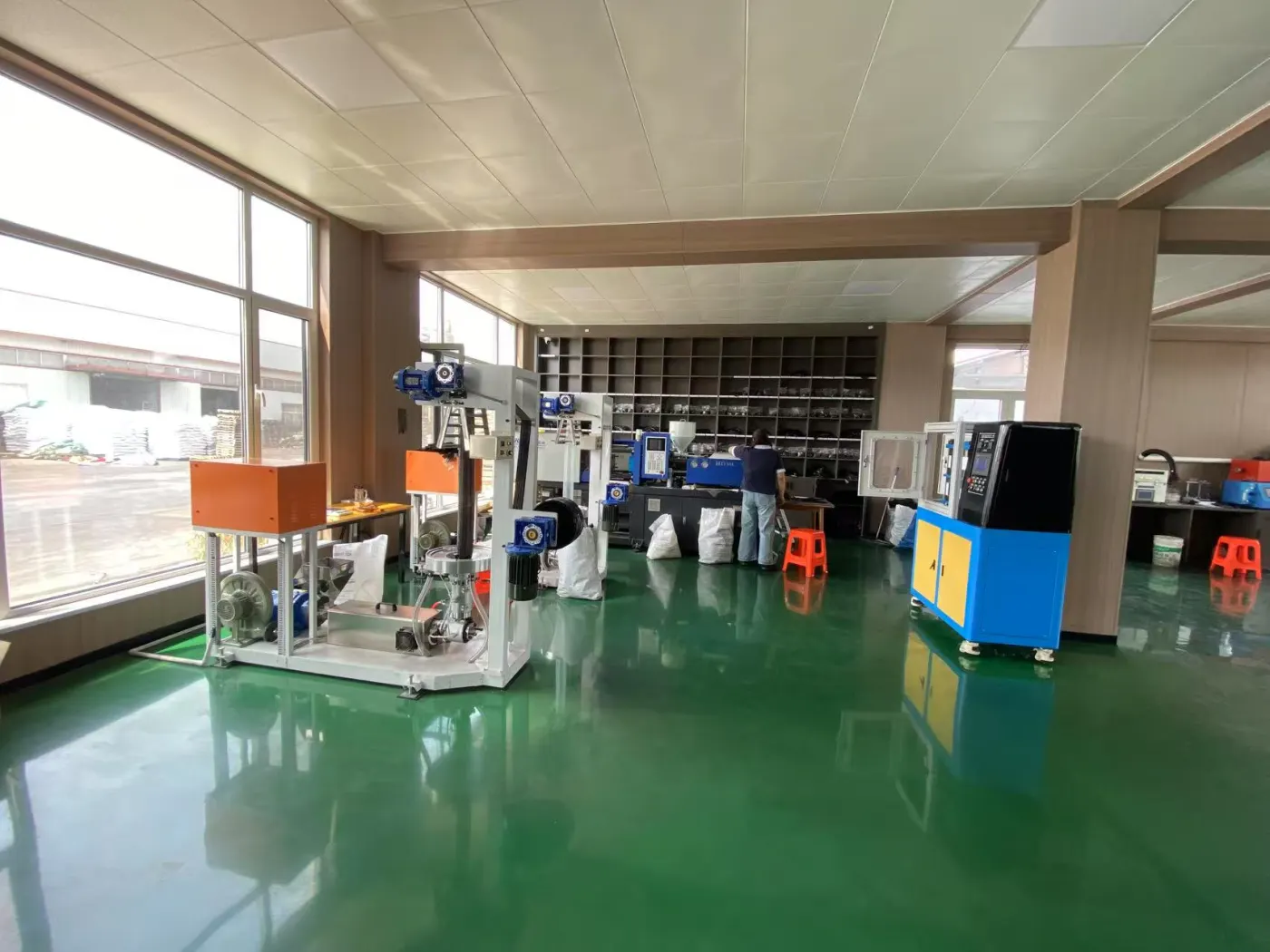
GE CHEMICAL & POLYMER GROUP CO., LTD is based in Shandong, China. Company materials list 12 production lines, annual capacity above 50,000 tonnes and service to more than 30 markets. Grade-specific availability and documents still require review.
GE CHEMICAL also supplies black masterbatch for carbon-black appearance and dispersion. Many PE plants buy a drying concentrate for humid periods alongside black grades. Keep the grades, document requests and approval records separate even when sourcing through one contact.
Use the supported TDS facts: grey granule, 75.9% grey CaO, 24% recycled PE carrier, 0% CaCO₃, 0.10% max moisture, 5 kg vacuum bags in 25 kg cartons, 1% recommended starting dosage and general injection, extrusion and film-blowing use.
Consider DM2476G for a high-CaO, zero-filler PE-compatible trial when a recycled carrier is acceptable and a low starting dose fits the process. It is not a default choice when food-contact approval or a virgin carrier is required.
Humid air, open storage and wet fines can introduce surface moisture even with PE. Sealed storage remains first. When moisture still reaches the hopper, DM2476G can be evaluated near the TDS starting dose instead of copying another plant’s percentage.
Regrind and washed flake have more surface area and may retain water from washing or storage. Record their share in the recipe during the trial. A change from low to high regrind can require a new dose check even with the same grade.
Run a side-by-side plaque or film at the planned dose. Dark utility products are less sensitive; natural, transparent and light-toned products may show the grey CaO package. Document a visual or instrumented appearance standard before approval.
Use the Black Masterbatch route for carbon-black selection and keep this page for moisture control. The product functions should stay separate in both purchasing and shop-floor recipes.
List commodity, DM2476G grade, grey granule, size, 75.9% grey CaO, 24% recycled PE, zero CaCO₃, dispersion and softening ratings, 0.10% max moisture, packing, 1% starting dose and listed applications. Attach the document requirements approved for the lot.
The company already supplies black masterbatch with listed production scale and laboratory testing. A desiccant trial can therefore be reviewed alongside a separate black-masterbatch requirement without presenting DM2476G as a universal product.
High CaO concentration puts more drying capacity into each pellet. At the TDS starting level near 1%, that can control moisture with a smaller additive load. The final dose and color effect must still be proven on the line.
It can be part of the diagnosis when color is correct but moisture-like defects remain. Trial DM2476G near 1% with the current black recipe and keep sealed storage. If bubbles persist, inspect resin wetness, dryer performance and venting.
Keep vacuum bags closed until dosing, follow the written approved ratio and reject damaged or long-open bags. Train operators that CaO reacts with water and that dry handling and SDS procedures apply. A one-page SOP prevents most field variance.
Record each plant’s resin mix, regrind level, climate, dryers, color tolerance and recycled-carrier rules. Align one sample retain, one purchase specification and one handling SOP. Do not carry a food-contact or virgin-carrier assumption from one site to another.
GE CHEMICAL runs 12 production lines with over 50,000 tonnes of annual capacity and serves customers in more than 30 markets. In-house laboratory testing supports review of documented masterbatch grades.

Share the resin, regrind share, moisture symptoms, storage conditions and process. The team can review whether a CaO desiccant trial fits the material and document scope.