

Matches polyethylene film, bags and molding within the PE process window.
Black Masterbatch & Carbon Black Masterbatch
Five grades from 20% to 40% carbon black for film, injection molding and recycled plastics.
Looking for a reliable black masterbatch supplier in China? GE CHEMICAL & POLYMER GROUP CO., LTD is a professional carbon black masterbatch manufacturer based in Shandong. We run 12 dedicated production lines with an annual capacity of over 50,000 tons, and we export to more than 30 countries. Tell us your base resin, target carbon black content, and monthly volume, and we will send you a quote.
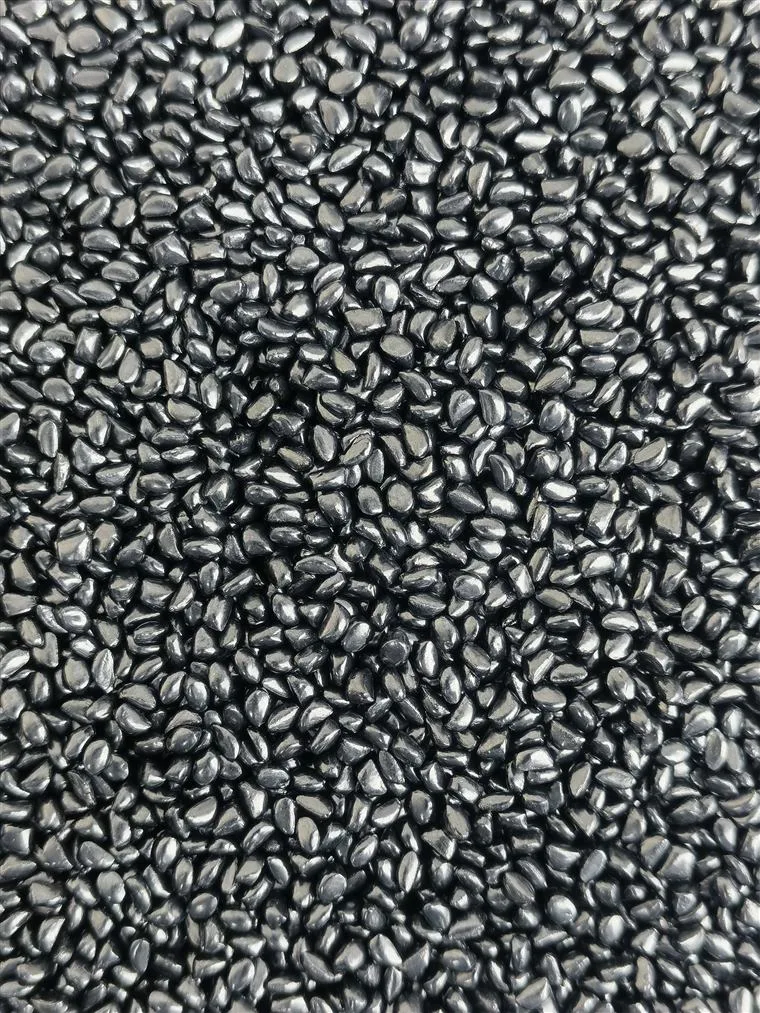
Black masterbatch composition and product range
The product is supplied as a pre-dispersed pellet. Carrier, carbon black, dispersing aids and pellet size form the basic specification.
Our black masterbatch range covers five carbon black loadings — 20%, 25%, 30%, 35%, and 40% — so you can pick the grade that matches your product and your cost target. Every grade uses a matched LLDPE + LDPE carrier and virgin carbon black, dispersed with PE wax and stearic acid, and is cut into uniform 2.5mm granules. From an economy 20% grade to a high-jetness 40% grade, one factory supplies the full gradient, so you do not need to juggle multiple suppliers as your needs change.
Choose a grade from 20% to 40% carbon black
Carbon black loading, filler content, carrier and intended use define the starting grade.
| Grade | Carbon black | Carrier | CaCO₃ filler | Positioning |
|---|---|---|---|---|
| BK020 | 20% | LLDPE + LDPE, 22% | 47.8% | Cost-focused grade for trash bags and re-granulating |
| BK025 | 25% | LLDPE + LDPE, 25% | 37.8% | Economy grade for blown film and injection molding |
| BK030 | 30% | LLDPE + LDPE, 32% | 27.8% | Balanced grade for bags and injection molding |
| BK035 | 35% | LLDPE + LDPE, 37% | 17.8% | High-jetness grade for bags and injection molding |
| BK040 | 40% | LLDPE + LDPE, 40% | 5.8% | High-quality grade for blown film and injection molding |
Carrier resin and compatibility
The carrier has to match the base polymer and the process window. These are the first compatibility checks.
Supports higher processing temperatures and better interface adhesion in PP.
Convenient for basic parts, but may give up jetness, odor or toughness.
Dispersion, moisture and melt flow
These checks connect the pellet specification to processing stability and the finished part.
What makes GE CHEMICAL’s black masterbatch different? First, stable dispersion — you get no carbon black specks and no screen blocking during processing. Second, tight moisture control to 0.2% max, so you avoid bubbles and surface defects. Third, adjustable MFI to match your machine and resin. And because we make the full 20%–40% range in-house, we recommend the grade that fits your line instead of forcing one standard product on you.
- DispersionSpecks and screen blocking
- Moisture0.2% maximum
- Melt flowMFI matched to machine and resin
Black masterbatch applications
Film, packaging bags, injection molding, recycled plastics and pipe inquiries need different grades and checks.
Our black masterbatch serves film blowing, injection molding, and recycled plastic. If you extrude film for trash bags and shopping bags, mold black plastic parts, or re-compound recycled resin, we have a black masterbatch for film and packaging and a black masterbatch for injection molding that fit. The 20%–30% grades are cost-effective workhorses; the 35%–40% grades deliver deeper black and lower dosage.
Laboratory checks, batch testing and samples
Every lot is checked before shipment, and a trial sample lets the buyer verify the grade on the actual line.
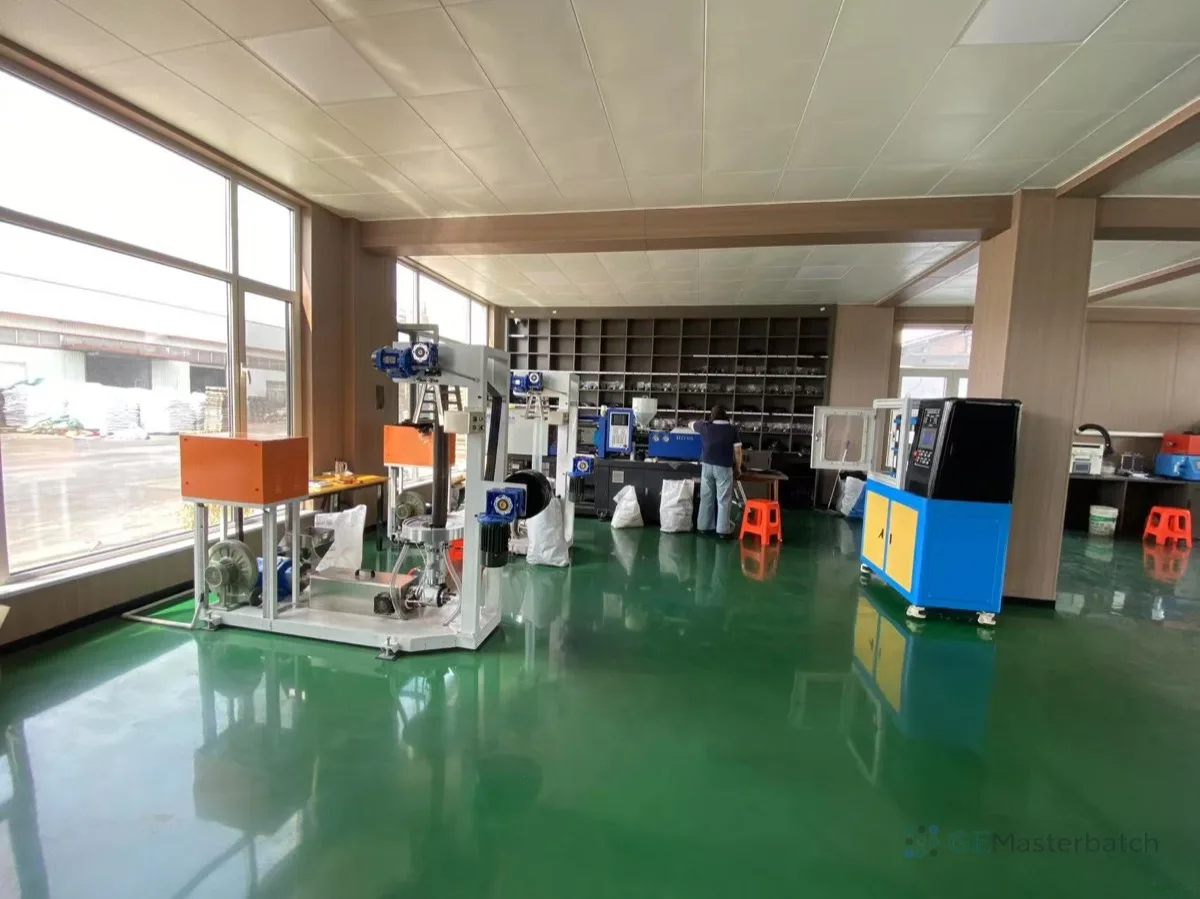
Behind every lot of GE CHEMICAL black masterbatch is a well-equipped in-house lab. We test carbon black content, moisture, and melt flow on every batch, and we provide a free sample so you can check dispersion and color on your own line before you commit. Our team will help you select the right loading for your application.
- Batch testCarbon black content
Every lot is checked against the grade.
- Process checkMoisture and melt flow
Both are reviewed before shipment.
- Line trialFree sample
Test dispersion, color and processing on your own process.
Purchasing, documents and compliance
Compare cost per ton, confirm the exact grade, and request current technical or compliance files for the intended market.
Carbon black content, carrier, moisture, MFI and recommended addition ratio.
Current safety data for the supplied product.
Analysis information for the lot under review.
RoHS, REACH and food-contact files only where applicable.
Manufacturing scale and related products
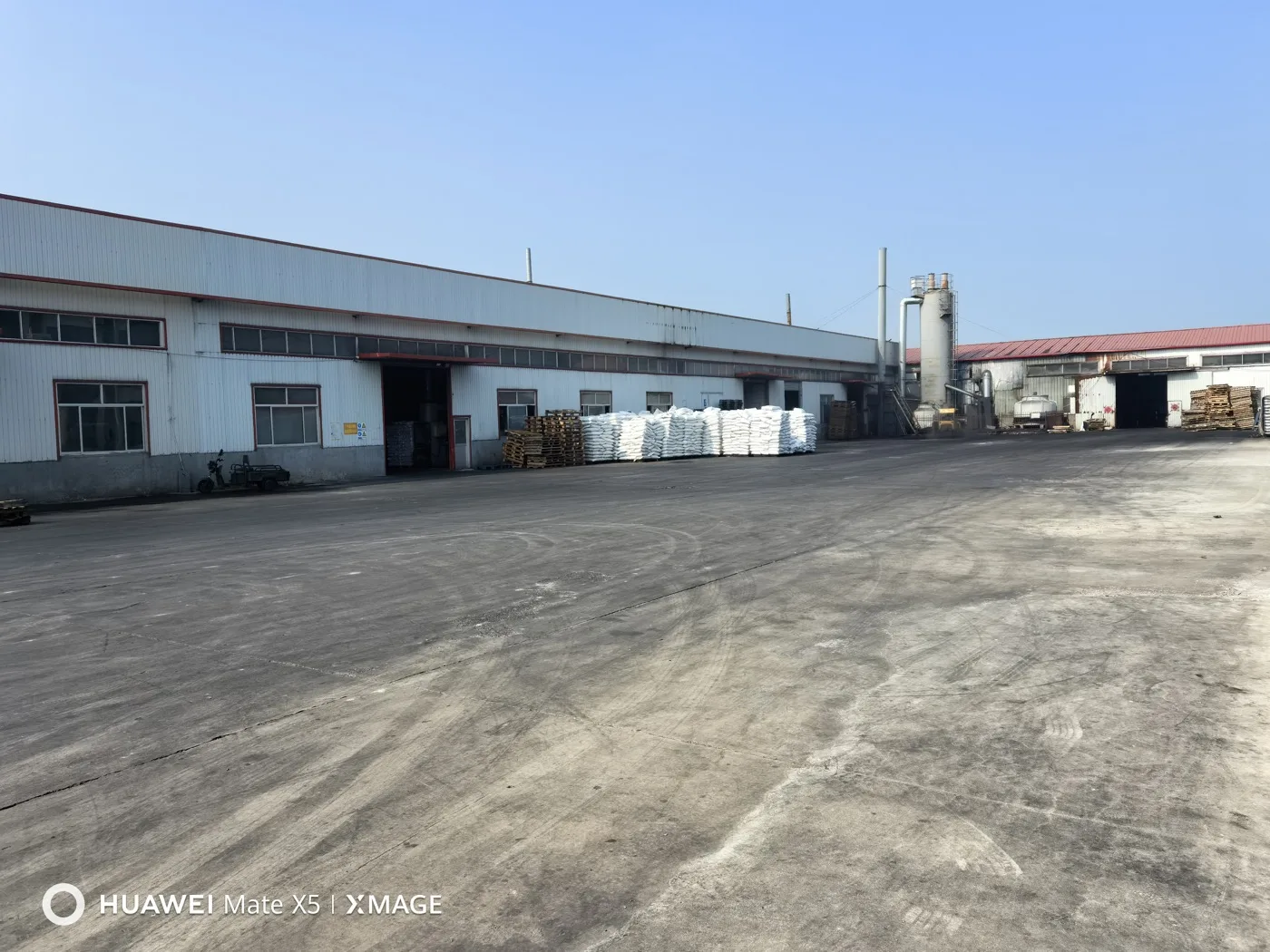
GE CHEMICAL works with big, well-known brands and masterbatch manufacturers like Total and Tosaf. With 12 production lines and more than 50,000 tons of annual supply, we have the scale to handle your repeat orders without delay — and the quality system to keep every batch consistent.
- Production lines
- 12
- Annual capacity
- 50,000+ tons
- Export markets
- 30+ countries
Black masterbatch buyer FAQ
Product basics, loading, carrier resin, quality, purchasing and application questions.
A. Product basics
What is black masterbatch, and what is it made of?
Black masterbatch is a concentrated pellet made of carbon black pigment dispersed in a carrier resin with dispersing aids. Instead of handling dusty carbon black powder, you dose identical pellets into your base resin. Our grades use virgin carbon black in an LLDPE + LDPE carrier with PE wax and stearic acid, compounded into uniform 2.5mm granules.
What is the difference between black masterbatch and raw carbon black powder?
Raw carbon black is a fine, dusty powder that is hard to handle, hard to dose accurately, and hard to disperse evenly. A masterbatch pre-disperses the pigment into a pellet, which removes dust from your workshop, gives you reproducible dosing, and delivers consistent color batch after batch. That is why processors keep moving from raw pigment to pelletized concentrate.
What does carbon black content (loading) mean in a black masterbatch?
Carbon black content is the percentage of carbon black pigment inside the pellet. A 40% grade carries twice as much pigment per pellet as a 20% grade, so you add fewer pellets to reach the same blackness. Loading is only one parameter — the carbon black grade, carrier, and dispersion quality all affect the final result.
What is jetness, and why does it matter?
Jetness is how deep and neutral the black looks. It depends mainly on carbon black particle size — smaller particles give a deeper, more blue-toned black, while larger particles look browner but disperse more easily. For a deep black in film or molded parts, you want a fine furnace black that is well dispersed.
B. Carbon black loading and grade selection
How do I choose between 20%, 30%, and 40% carbon black content?
Match the loading to your application and cost target. Lower loadings (20%–30%) are cost-effective for thick parts and general molding where absolute blackness is less critical, and they often carry more filler to keep cost down. Higher loadings (35%–40%) deliver deeper black at a lower addition rate, which suits thin film and high-gloss parts. The right choice balances the blackness you need against the dosage you want to run — and we can walk you through that trade-off with a sample trial.
What is the difference between low (20%) and high (40%) loading grades?
A low-loading grade is cheaper per kilogram but needs a higher addition rate, and it often contains more filler to keep the cost down. A high-loading grade costs more per kilogram but lets you dose less, saving warehouse space and reducing color-changeover time. The real comparison is cost per ton of finished product, not cost per kilogram.
Does higher carbon black content always mean better or cheaper?
No. Higher content only helps if the carbon black stays well dispersed and you actually lower your dosage. An over-concentrated pellet that is hard to feed or poorly dispersed can cause streaks and dosing variation, and at very low addition rates your feeder may drop below its stable operating range. Compare on cost per ton of your finished product — a cheaper grade that needs a higher dose can end up costing more than a higher-loading grade.
What carbon black content should I use for blown film / trash bags?
For blown film and trash bags, thin gauge makes defects visible, so dispersion matters most. A 25%–40% loading with a matched LLDPE + LDPE carrier works well, and higher loadings let you dose less while keeping deep, uniform black. Our BK025, BK035, and BK040 are all suited to film blowing.
What carbon black content should I use for injection molding?
For injection molding, you want uniform color, good surface finish, and a carrier that does not reduce part strength. A 20%–35% loading covers most general black molded parts, with higher loadings used when you need deep black or a lower dosage. Our BK020 through BK035 cover the full molding range.
What is the typical carbon black loading range for PE carrier masterbatch?
For PE carrier masterbatch, a 20%–50% loading is a practical working range. PE film typically uses 20%–35%, injection-molded parts 30%–45%, and special high-jetness applications may push toward 50%. Beyond about 50%, dispersion becomes difficult and the pellet gets dusty and hard to feed consistently.
What does filler (CaCO₃) content mean, and how does it affect cost vs gloss?
Filler such as calcium carbonate (CaCO₃) lowers the cost per kilogram while keeping a consistent black. The trade-off is slightly reduced gloss and mechanical strength compared to a filler-free grade, because the filler occupies volume that would otherwise be polymer. Our economy grades (like BK020 at 47.8% CaCO₃) suit cost-sensitive trash bags and re-granulating, while our high-end BK040 (5.8%) delivers a cleaner, higher-gloss black. Across our range, filler steps down as carbon black steps up.
How do I compare two grades with the same carbon black content?
Do not compare percentage alone. Check the carbon black grade, carrier match, dispersion quality, and moisture. Two 30% grades can perform very differently if one uses a coarse low-cost pigment and weak dispersion. Judge the final result on your own line at the same let-down ratio, not just the number on the datasheet.
C. Carrier resin
What does the carrier resin do, and why must it match my base resin?
The carrier is the bridge that carries carbon black into your polymer. If it does not match your base resin, you get poor color development, a matte surface, or reduced impact strength. Our grades use an LLDPE + LDPE carrier, which is compatible with LDPE and LLDPE film and molding applications.
Can I use a PE-based black masterbatch in a PP product?
You can in low-demand parts, but it is not ideal. A PE carrier in PP can act like a foreign phase, reducing impact strength and causing surface defects or delamination at the particle interface. For PP parts, a PP carrier gives better interface adhesion and color development. Tell us your base resin and we will recommend the right carrier rather than forcing a mismatched grade.
What is the difference between a PE carrier and a PP carrier?
A PE carrier matches polyethylene film, bags, and molding, melting and mixing cleanly inside the PE process window. A PP carrier matches polypropylene parts and resists higher processing temperatures. Using the wrong carrier is the most common cause of delamination and weak weld lines, so the carrier should match your base resin, not just the color.
Why is a “universal” carrier not always the best choice?
A universal carrier works for simple PE or PP parts but sacrifices jetness, odor, or toughness in demanding products. It is a cost saving for the producer, not a performance upgrade for you. For deep black, chemical resistance, or long service life, a polymer-matched carrier performs better.
What carrier resin matches LDPE / LLDPE film applications?
For LDPE and LLDPE film, an LDPE or LLDPE carrier is the correct match — it melts and disperses within the same temperature window and does not create weak spots in the thin film. All our grades use an LLDPE + LDPE carrier, which is why they run cleanly on film lines making garbage bags and shopping bags.
D. Dispersion and quality
What is dispersion, and how is it measured (filter pressure value / FPV)?
Dispersion is how evenly the carbon black is separated inside the carrier. Poor dispersion shows up as black specks, streaks, and screen pressure rise. It is measured by a filter pressure value (FPV) test — forcing melt through a fine mesh and recording the pressure rise, with a lower value meaning better dispersion. Good dispersion is the single most important quality factor in a black masterbatch, which is why we test it and can share the data for your grade.
Why does my film show black specks / tiger stripes / fish eyes?
These are almost always a dispersion problem — carbon black agglomerates that were not fully broken down, or a carrier that does not match your film resin. A well-dispersed masterbatch avoids this. If the problem started after switching suppliers, the new grade likely has weaker dispersion.
Why does my black product look grey instead of deep black?
Four usual causes, in order: total carbon black content too low, a coarse pigment grade, poor dispersion leaving light-scattering agglomerates, or color variation in your natural resin. Check your addition ratio first, then the grade and dispersion. If it is still grey, contact us and we will help you diagnose it.
How do you control batch-to-batch color consistency?
We control consistency through our in-house lab and standardized production. We test carbon black content, moisture, and melt flow on every lot, so tint strength and blackness stay stable from week to week. This lets you run the same recipe without adjusting your machine settings.
What is the ideal let-down ratio (addition rate) for black masterbatch?
The typical let-down ratio is 1%–5% by weight, depending on product thickness, loading, and the opacity you need. Thick parts can reach deep black at the low end, while thin film may need a higher dose for full light blockage. Start with a small-batch trial on your own line to find your exact ratio, then lock it in for repeat runs — and keep the ratio stable, since drift causes batch-to-batch shade variation.
What causes bubbles / voids in my molded parts?
Bubbles and voids are usually caused by moisture in the masterbatch or base resin turning to steam in the barrel. Our grades are controlled to 0.2% max moisture and packed in moisture-resistant bags. Store bags dry, and pre-dry if you process in a humid climate.
E. Purchasing and verification
What should I ask a black masterbatch supplier before ordering?
Ask for the carrier resin family, carbon black grade, FPV test data, moisture limit, and a TDS. Request a sample to run on your own line, and confirm batch-to-batch consistency with a COA. Also ask whether you are dealing with a manufacturer or a trader — a real manufacturer will ask about your resin, temperature, and final part before recommending a grade. A supplier who cannot confirm the carrier type or show dispersion data is a red flag.
What information should I send to get an accurate quote?
Tell us your base resin and grade, process type (film, injection, blow molding), processing temperature, target carbon black content, and monthly volume. Also state your end application and any regulatory needs, so we can recommend the correct grade and documentation for your market.
Can I get a free sample to test before ordering?
Yes. We provide free samples so you can check dispersion, color, and processing on your own line before committing. Contact us with your base resin and application, and we will arrange a trial sample matched to your process.
Can I get a TDS / SDS / COA for your black masterbatch?
Yes. We provide a technical data sheet (TDS), safety data sheet (SDS), and certificate of analysis (COA) for every lot, covering carbon black content, carrier, moisture, MFI, packaging, and recommended addition ratio. Request them and we will send the latest version for your grade.
Is your black masterbatch RoHS / REACH / FDA compliant?
Compliance depends on the grade and your target market. We provide RoHS, REACH, and food-contact documentation where applicable — tell us your market and application, and we will confirm the applicable document for your specific grade. We do not publish blanket claims without supporting evidence.
Can you customize carbon black content, MFI, or carrier resin?
Yes. We can adjust carbon black content, MFI, and carrier to match your machine, resin, and target blackness. Custom development starts with a short spec — base polymer, process, temperature, let-down target, and regulatory needs — and we produce a sample for your trial before scaling up.
How should I compare the price of two black masterbatches (per kg vs per ton)?
Compare cost per ton of finished product, not price per kilogram. Use “masterbatch price × actual addition rate” to find your real cost, and factor in dispersion — a cheaper grade that needs a higher dose can cost more per ton of output, plus extra storage and color-changeover time. The grade that runs at the lowest total cost per ton of finished product wins, even if its per-kilogram price is higher.
F. Application scenarios
What is the best black masterbatch for trash bags / garbage bags?
For trash bags, dispersion and low gel count matter most, because the film is thin and defects are visible. A 20%–40% loading with an LLDPE + LDPE carrier works well, with moisture held low to avoid bubbles in the film. Our BK020 and BK030 are popular economy choices, while BK040 delivers deeper black at a lower dosage for premium bags. We can send a sample matched to your film line.
What black masterbatch should I use for blown film?
For blown film, you want a matched LLDPE + LDPE carrier, stable dispersion, and low moisture. Our BK025, BK035, and BK040 are suited to film blowing, with higher loadings letting you dose less while keeping deep, uniform black on garbage bags and shopping bags.
Which black masterbatch is suitable for injection molding?
For injection molding, choose a grade with uniform color, good surface finish, and a carrier that does not reduce part strength. Our BK020 through BK035 cover general black molded parts, with adjustable MFI so we can match the flow to your molding machine.
Can I use black masterbatch for recycled plastic / re-granulating?
Yes. Black masterbatch is widely used to color recycled resin, and black is ideal for masking the natural color variation of regrind. Our BK020 is well suited to re-granulating and recycled PE. Because recycled resin varies, we recommend a trial to confirm the addition ratio and final blackness on your specific regrind.
What black masterbatch works for HDPE pipe (UV protection)?
For HDPE pipe, review the pipe and profile black masterbatch page first. Carbon black content, dispersion, carrier and the pipe standard all affect the result. Tell us your pipe grade and service conditions, and the team can review the grade and trial direction.
What is the difference between black masterbatch for film vs injection molding?
Film needs very fine dispersion and low gel count because the gauge is thin and defects are visible, so higher loadings and a matched film carrier are preferred. Injection molding prioritizes surface finish, flow, and mechanical strength, so a lower-to-medium loading with adjustable MFI works best. A film grade can plug a molding machine’s gate or leave surface defects, and a molding grade can break a thin film — so we formulate each grade for its process and can help you pick the right one.
Request a black masterbatch quote
Ready to get a quote for black masterbatch? Send us your base resin, target carbon black content, and monthly volume — and get a quick quote and a free sample for your trial today.
Base resinCarbon black contentMonthly volumeApplication